On-chain analytics
Indexing, labelling and dashboards built over raw chain data.

- Engagement
- Fixed-scope build, hosted by you or by us
- Typical timeline
- 5–6 weeks
- Starts with
- The contract addresses you care about and five questions you cannot answer today.
You have fourteen thousand holder addresses and no idea how many people that represents. Two of them might be the same exchange, forty might be one fund, and the wallet that looks like your most loyal user is a bridge contract that never chose anything.
Wallet and protocol behaviour you can act on.
What we build
Concrete artefacts, handed over and documented.
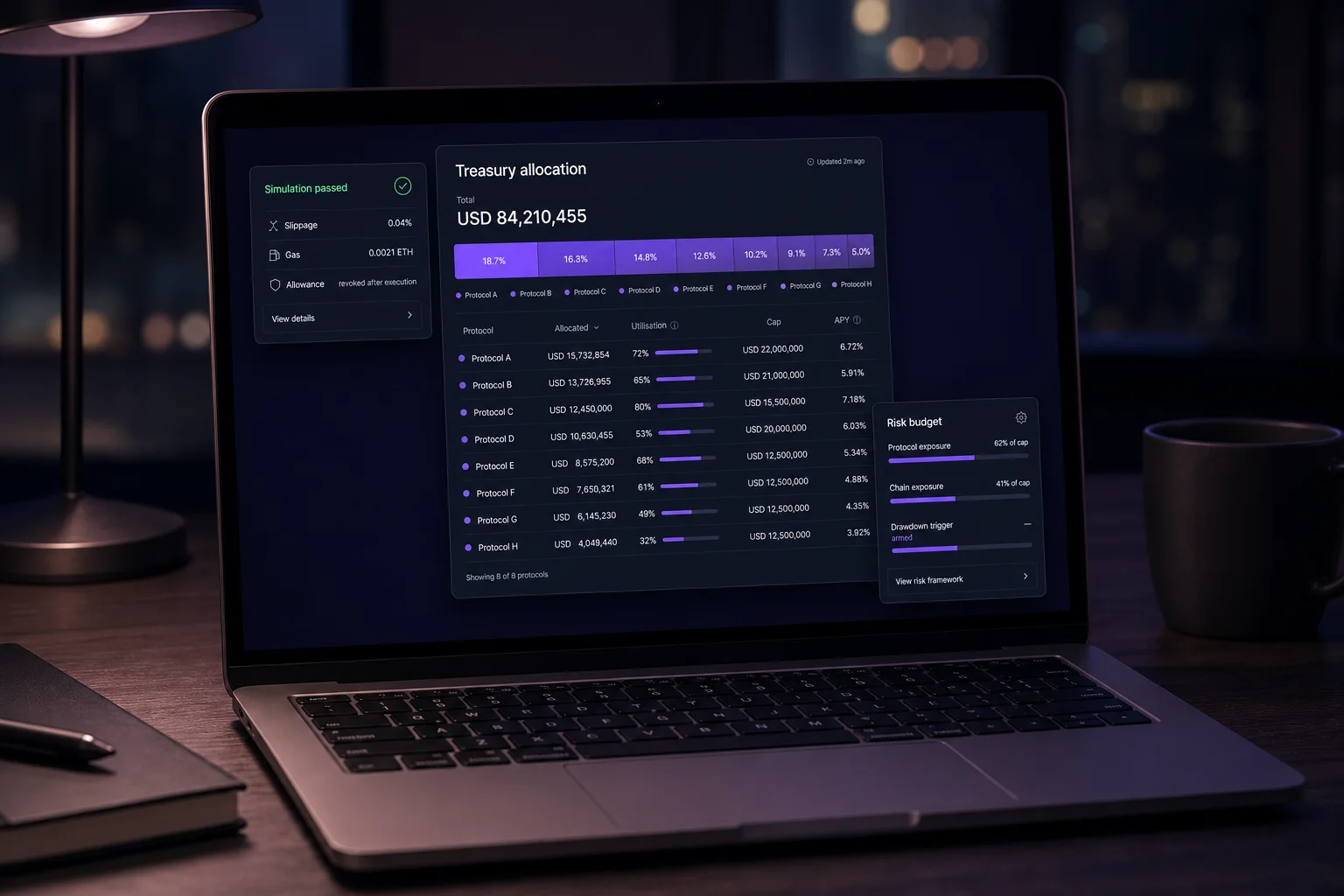
An indexer for your contracts and the pools around them, storing history in your own database so it can be queried like any other table
Address labelling for exchanges, bridges, contracts and known market makers, so real holders can be separated from infrastructure
Holder cohorts by entry point and time held, which is the closest honest equivalent to a retention curve on chain
Liquidity and concentration monitoring, including how much of the supply could realistically leave in a single day
Alerts on the movements that actually matter to you, a large vesting recipient selling, liquidity leaving a pool, sustained accumulation
What changes
Holder counts become a defensible number rather than an address count
Liquidity risk is watched continuously instead of discovered on a red day
Treasury and community decisions get argued from behaviour rather than sentiment
How it runs
01Contracts and questions
Which addresses matter and the five questions you currently cannot answer about them.
02Indexing and labelling
History pulled into your own database, with infrastructure addresses identified so the numbers mean something.
03Cohorts and alerts
The dashboard, the cohort views, and alerting tuned so it fires rarely enough that people still read it.
Chosen per project. Named here so you can see the shape of it.
- The Graph
- Dune
- Postgres
- viem
Questions we get asked
Tell us the outcome, not the tooling.
Send us the situation you are in. We will tell you which discipline it belongs to, what we would do first and what it costs, including when the answer is to wait.