Portfolio analytics
Exposure, attribution, correlation and performance measurement across venues and assets.

- Engagement
- Fixed-scope build
- Typical timeline
- 6–8 weeks
- Starts with
- Read-only API keys for every venue and one statement from each broker.
Eleven accounts across four venues, two brokers and a custody provider, and the only consolidated picture is a spreadsheet someone rebuilds on Sunday night. By Wednesday it is wrong, and nobody can say by how much.
Knowing precisely where returns and risk are coming from.
What we build
Concrete artefacts, handed over and documented.
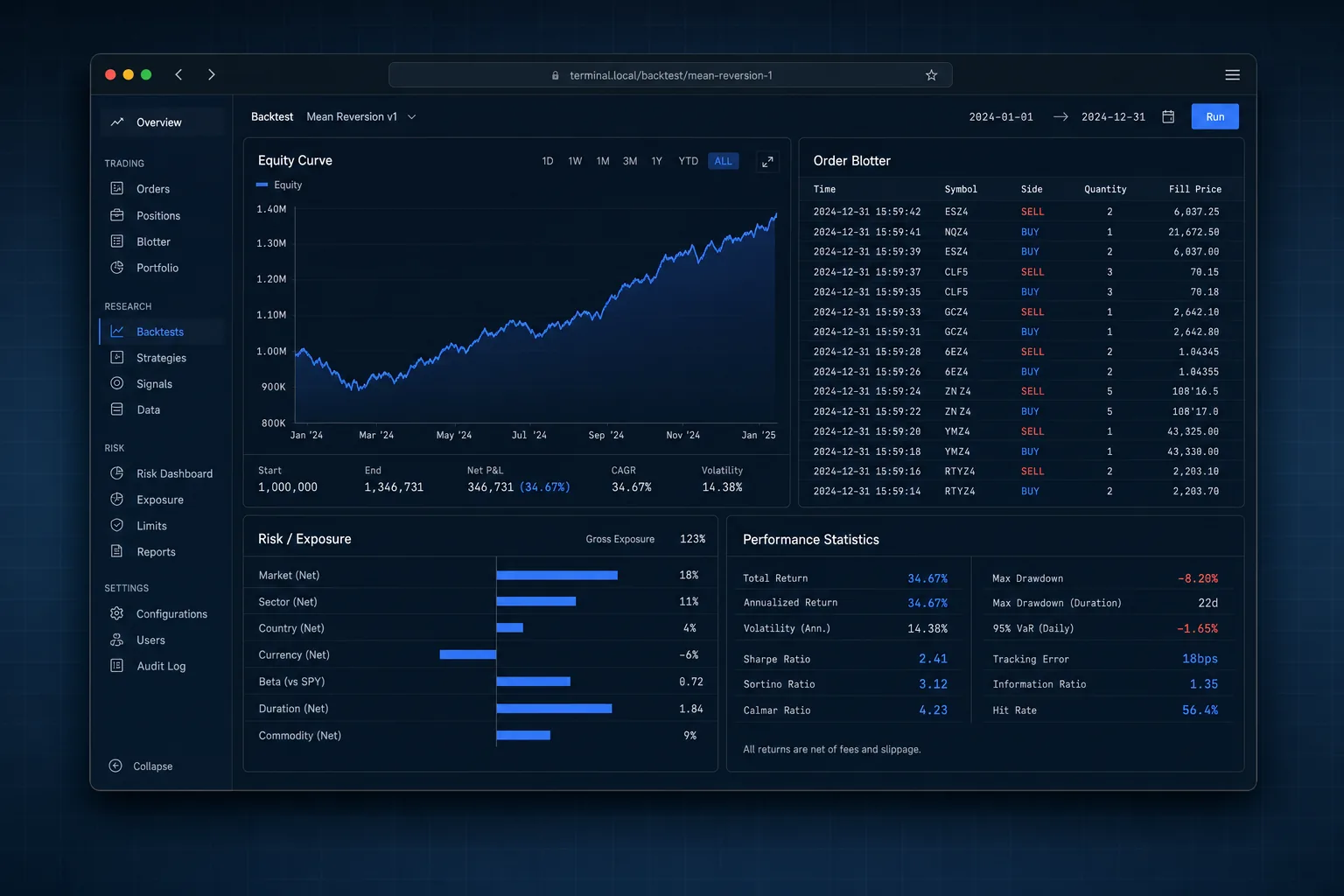
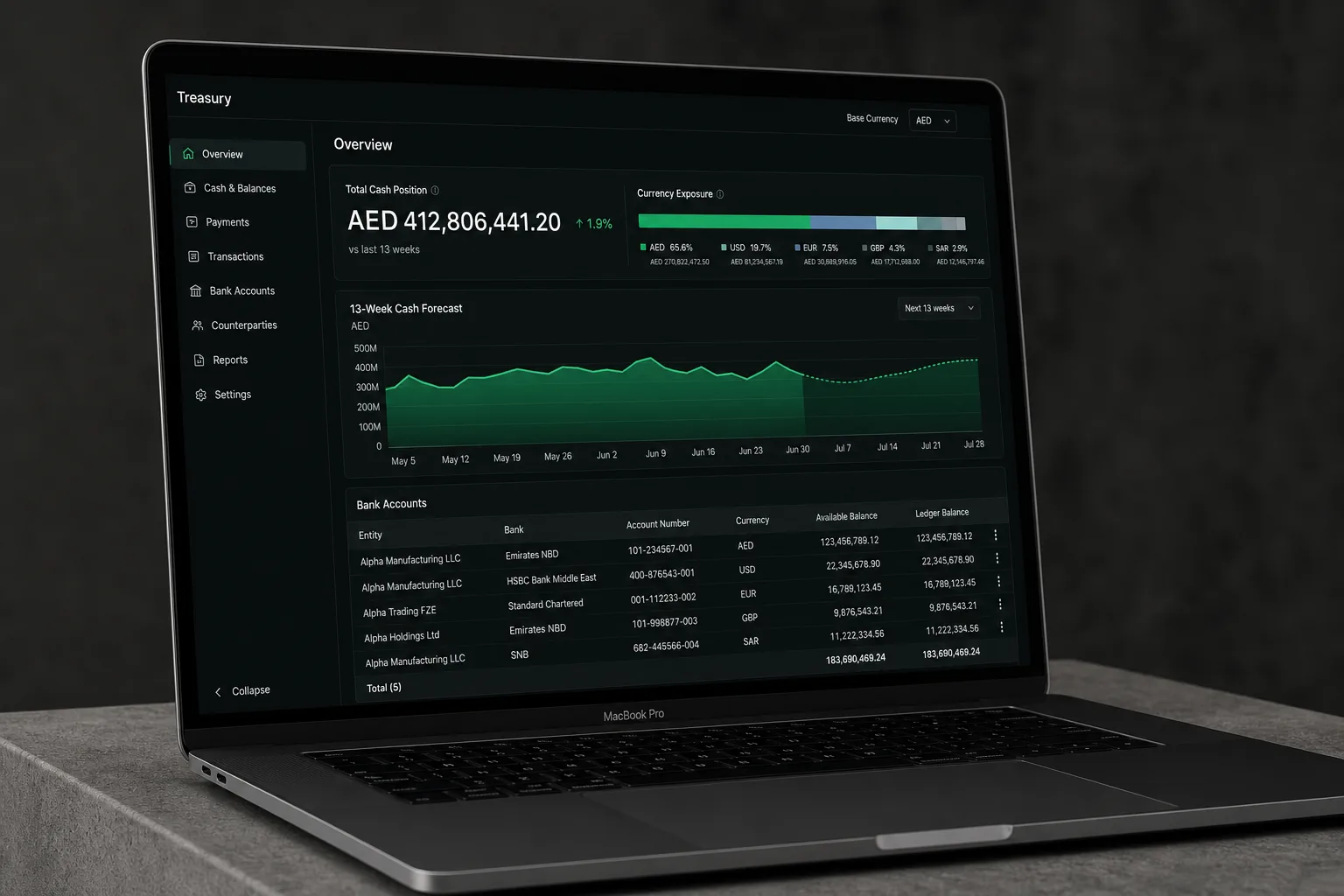
One consolidated position and cash view across venues, brokers and wallets, normalised into a single reporting currency
Exposure broken down the way your book actually works: by asset, sector, venue, counterparty and currency
Attribution that separates the return your decisions produced from the market movement you were simply carried by
Standard measures computed one agreed way, time-weighted return, drawdown, volatility, Sharpe, with each formula written down
Daily snapshots retained, so any past date can be reproduced exactly instead of recalculated from today’s prices
Investor-ready statements per account or fund, generated on the cadence you report
What changes
Investor and board questions get answered the same day rather than the following week
Skill is separated from market drift, so allocation decisions rest on something
Historic reporting stops changing every time it is regenerated
How it runs
- Weeks 1–2
01Connect and normalise
Every venue, broker and wallet pulled into one schema, with fees and funding treated consistently.
- Weeks 3–4
02Agree the measures
We fix the definitions in writing, because two people computing return two ways is the usual cause of a disputed report.
- Weeks 5–8
03Views and history
The exposure and attribution views, plus the snapshot archive that makes old reports reproducible.
Chosen per project. Named here so you can see the shape of it.
- Python
- pandas
- Postgres
- dbt
- Metabase
Questions we get asked
Tell us the outcome, not the tooling.
Send us the situation you are in. We will tell you which discipline it belongs to, what we would do first and what it costs, including when the answer is to wait.