Quantitative trading systems
Data pipelines, execution, position sizing and monitoring as one production system.

- Engagement
- Phased build with a dedicated engineering team
- Typical timeline
- 4–6 months
- Starts with
- A week spent mapping your venues, instruments and existing order flow.
A desk can trade from three terminals, two spreadsheets and a group chat. What it cannot do is say, at four in the afternoon, what it owns, what it paid, and why the fill came in eleven basis points worse than the price on the screen.
A strategy that runs reliably with real money on it.
What we build
Concrete artefacts, handed over and documented.
Market data ingestion with gap detection and replay, so a missing minute is visible rather than silently filled in
A time-series store sized for your history and your query pattern, instead of a folder of files per day
A strategy runtime where the same code path runs in simulation and in production
Order management with venue adapters, retry rules and order identifiers that cannot be duplicated
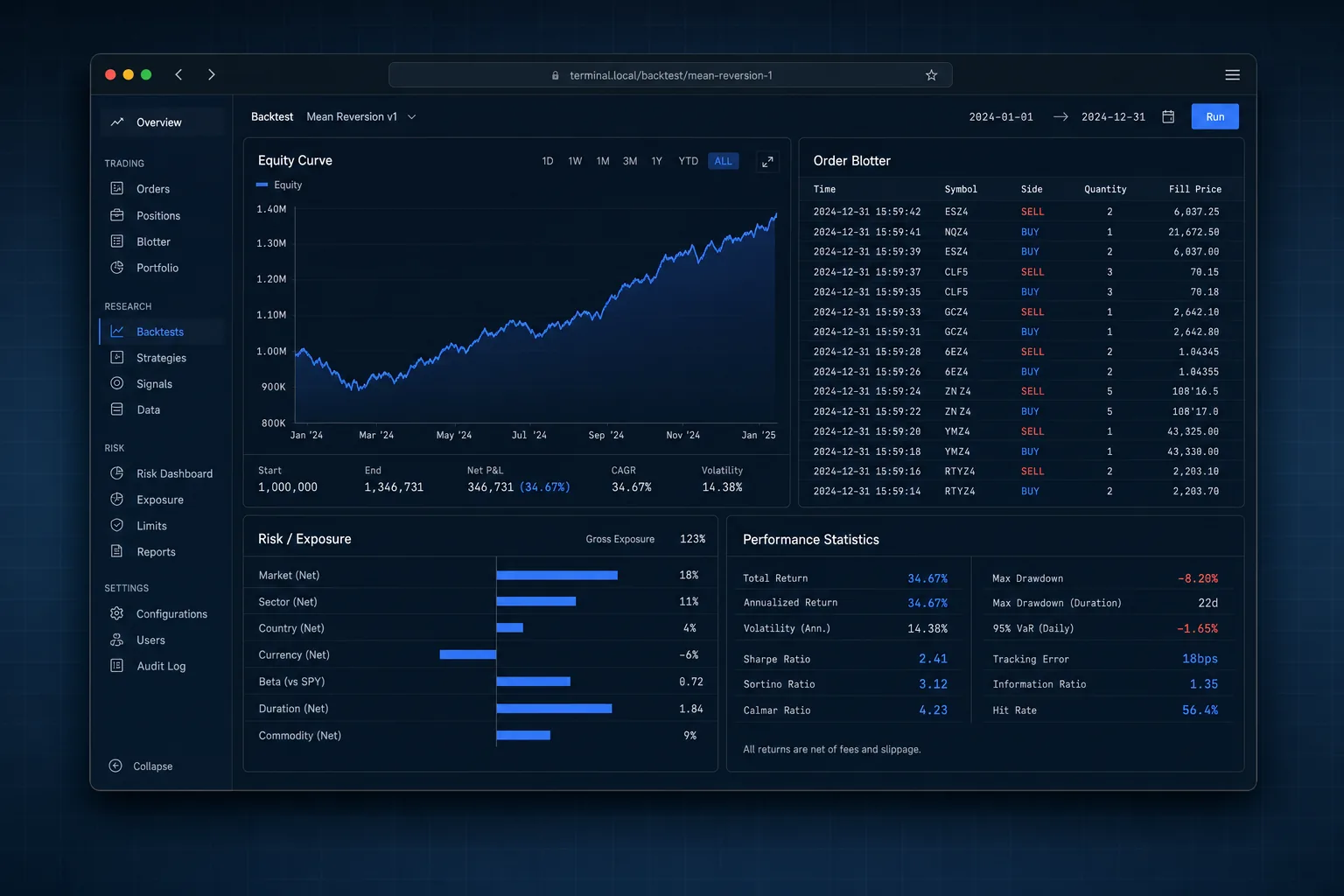
Execution measurement: slippage, the gap between the price you expected and the price you got, recorded per order, per venue, per hour
End-of-day reconciliation against exchange statements, where a break becomes a ticket rather than a surprise next month
What changes
Positions, cash and exposure agree with every venue each morning
Slippage becomes a number you manage instead of a feeling about a bad week
A new strategy reaches production in days, because the plumbing already exists
How it runs
- Weeks 1–4
01Data and storage
Feeds, history, gap handling and the store everything else will read from.
- Weeks 5–14
02Runtime and execution
Strategy runtime, order management, venue adapters and the measurement that tells you what execution costs.
- Weeks 15–22
03Paper, then live
Weeks of paper trading against live prices, then production at reduced size while reconciliation is proven.
Chosen per project. Named here so you can see the shape of it.
- Python
- Kafka
- ClickHouse
- Redis
- Postgres
- Grafana
Questions we get asked
Tell us the outcome, not the tooling.
Send us the situation you are in. We will tell you which discipline it belongs to, what we would do first and what it costs, including when the answer is to wait.