Trading automation
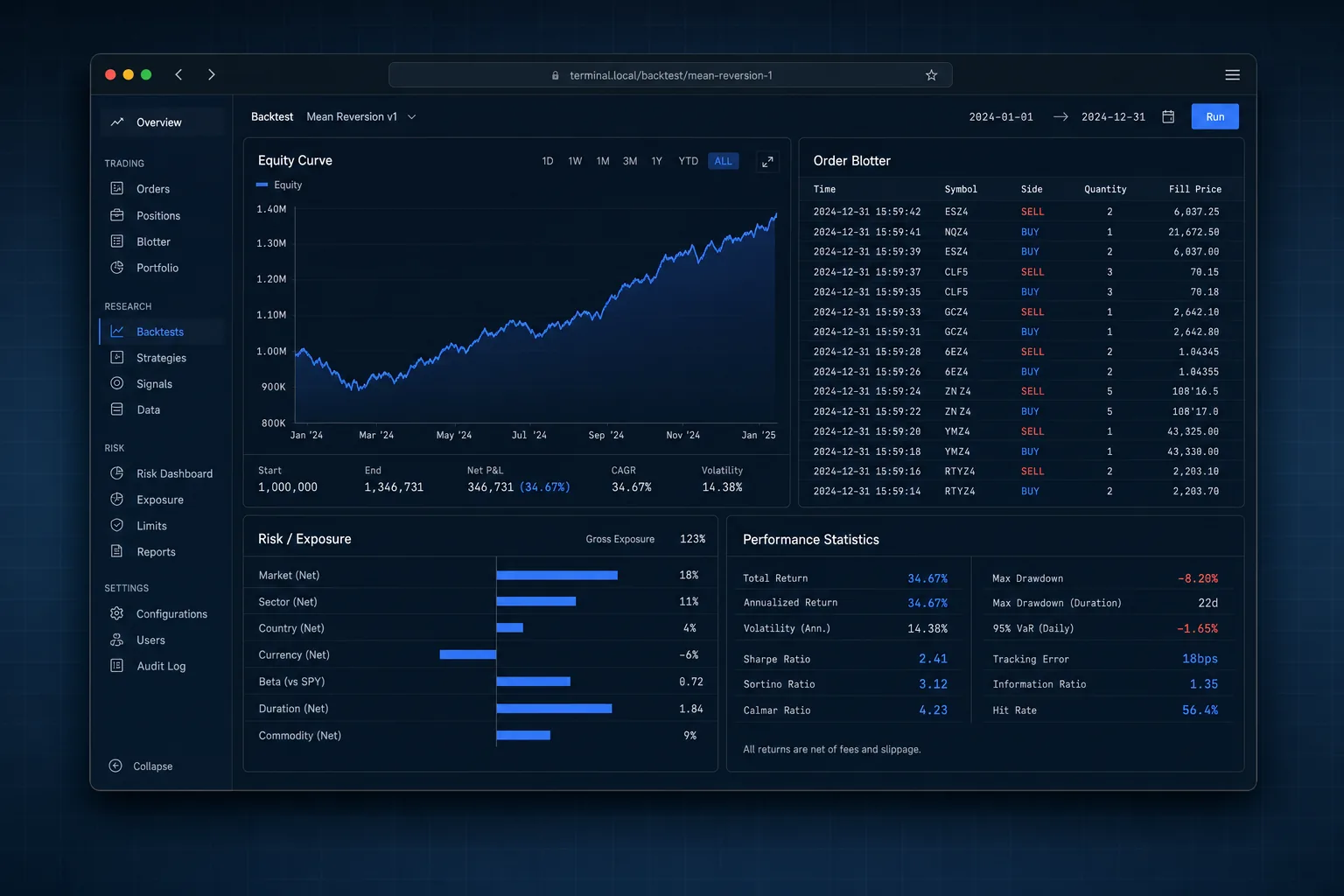
Rules, exchange connectivity, order management and fail-safes wired end to end.

- Engagement
- Fixed-scope build, monitoring retainer optional
- Typical timeline
- 4–6 weeks
- Starts with
- A call where you talk through your rules aloud while we write them down.
You already have a strategy that works when you are sitting at the desk. Its real cost is the entries missed while you slept, the exit you were too late for on a flight, and the order you sized wrong at two in the morning.
Consistent execution without emotion or missed windows.
What we build
Concrete artefacts, handed over and documented.
- 01
Your rules written as code, then read back to you in plain language and signed off before anything trades
- 02
Position, notional and daily-loss limits enforced inside the code path rather than in a policy document
- 03
A kill switch: one action that cancels working orders and stops new ones, reachable from your phone
- 04
An order log recording every decision, the inputs behind it and the result, exportable for your accountant
What changes
The strategy runs for the hours the market is open, not the hours you are awake
A mistyped size cannot become a position the account is unable to carry
Tax and audit season is short, because every trade already carries its reason
How it runs
01Rules on paper
We write your strategy as unambiguous rules and find the cases you have been resolving by instinct.
02Build and paper-trade
Implementation, limits and kill switch, running against live prices with no money at risk.
03Live at reduced size
Small size for a fortnight, then a review of how far real fills drifted from expected ones before limits rise.
Chosen per project. Named here so you can see the shape of it.
- Python
- CCXT
- Telegram Bot API
Questions we get asked
Tell us the outcome, not the tooling.
Send us the situation you are in. We will tell you which discipline it belongs to, what we would do first and what it costs, including when the answer is to wait.