Risk management systems
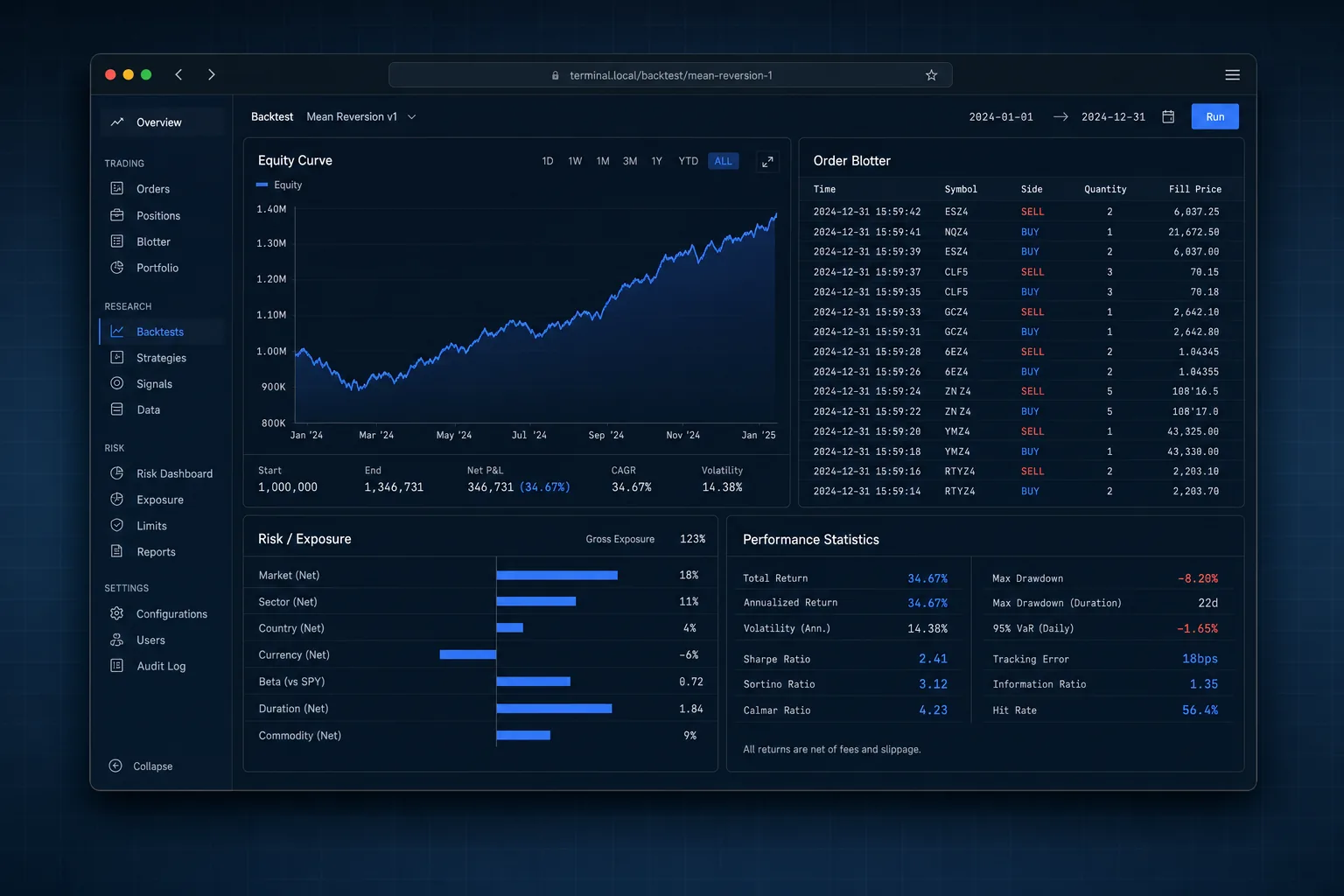
Limits, drawdown controls, kill switches and real-time exposure monitoring.

- Engagement
- Fixed-scope build, on-call support optional
- Typical timeline
- 8–10 weeks
- Starts with
- A session naming the four ways your book could lose more than you can afford.
The losses that end a trading business are rarely clever ones. They are a mistyped size, a stale price, or a strategy that kept buying for forty minutes after the data feed froze.
A bad day that stays a bad day instead of becoming an event.
What we build
Concrete artefacts, handed over and documented.
- 01
Pre-trade checks that reject an order before it leaves: size, notional, price collar, instrument whitelist, duplicate detection
- 02
Live limits on exposure, leverage, concentration and daily loss, evaluated on every position change rather than nightly
- 03
Heartbeat and stale-data detection, so a frozen feed halts trading instead of feeding it
- 04
Stress runs each night: historical shocks, correlations breaking down, and the specific move that hurts your book most
- 05
An escalation path stating what halts automatically, what wakes a human, who may override, and where each override is logged
- 06
A morning risk report showing limit usage and every breach, intentional or not
What changes
Errors are caught at the order gate instead of discovered in the P&L
Limit usage is visible during the day, not reconstructed afterwards
The risk conversation moves from trust to evidence
How it runs
01Limit framework
We write the limits with you, in numbers, including the ones currently held as an understanding between two people.
02Controls in the path
Pre-trade gates, live evaluation, feed monitoring and the alert routing behind them.
03Stress and drills
We break things on purpose, kill a feed, spike a price, breach a limit, and confirm the system does what the document promised.
Chosen per project. Named here so you can see the shape of it.
- Python
- Redis
- Postgres
- Grafana
- PagerDuty
Questions we get asked
Tell us the outcome, not the tooling.
Send us the situation you are in. We will tell you which discipline it belongs to, what we would do first and what it costs, including when the answer is to wait.